


The names of female fashion photographers are seldom remembered; the field has long been shaped and dominated by their male counterparts. And yet, it is often women who approach the many layers of female models with greater care and attentiveness. The works on display in an exhibition at Schloss Moyland bear quiet witness to this difference.
It is a black-and-white photograph from 1989. A young woman with full lips and a thick mane of blonde hair poses in jeans and a white lace bra; behind her stands a man in a cowboy hat. Her gaze is lifted upward—graceful and proud—her mouth half open. This photograph made both the model and the photographer famous in the international fashion world. It is a Guess campaign. The 17-year-old model from the Lower Rhine is Claudia Schiffer—behind the lens, the Frankfurt-born photographer Ellen von Unwerth.
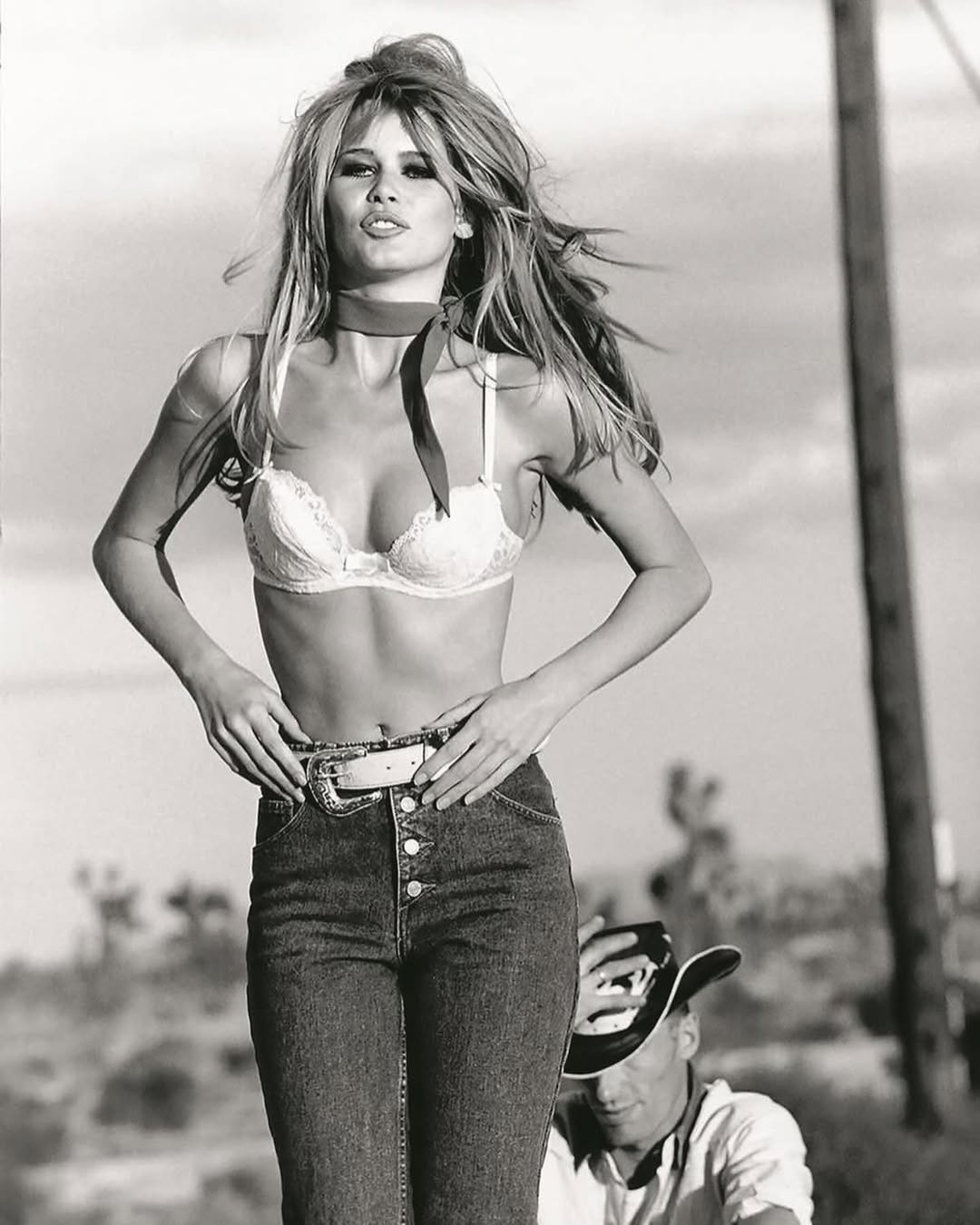
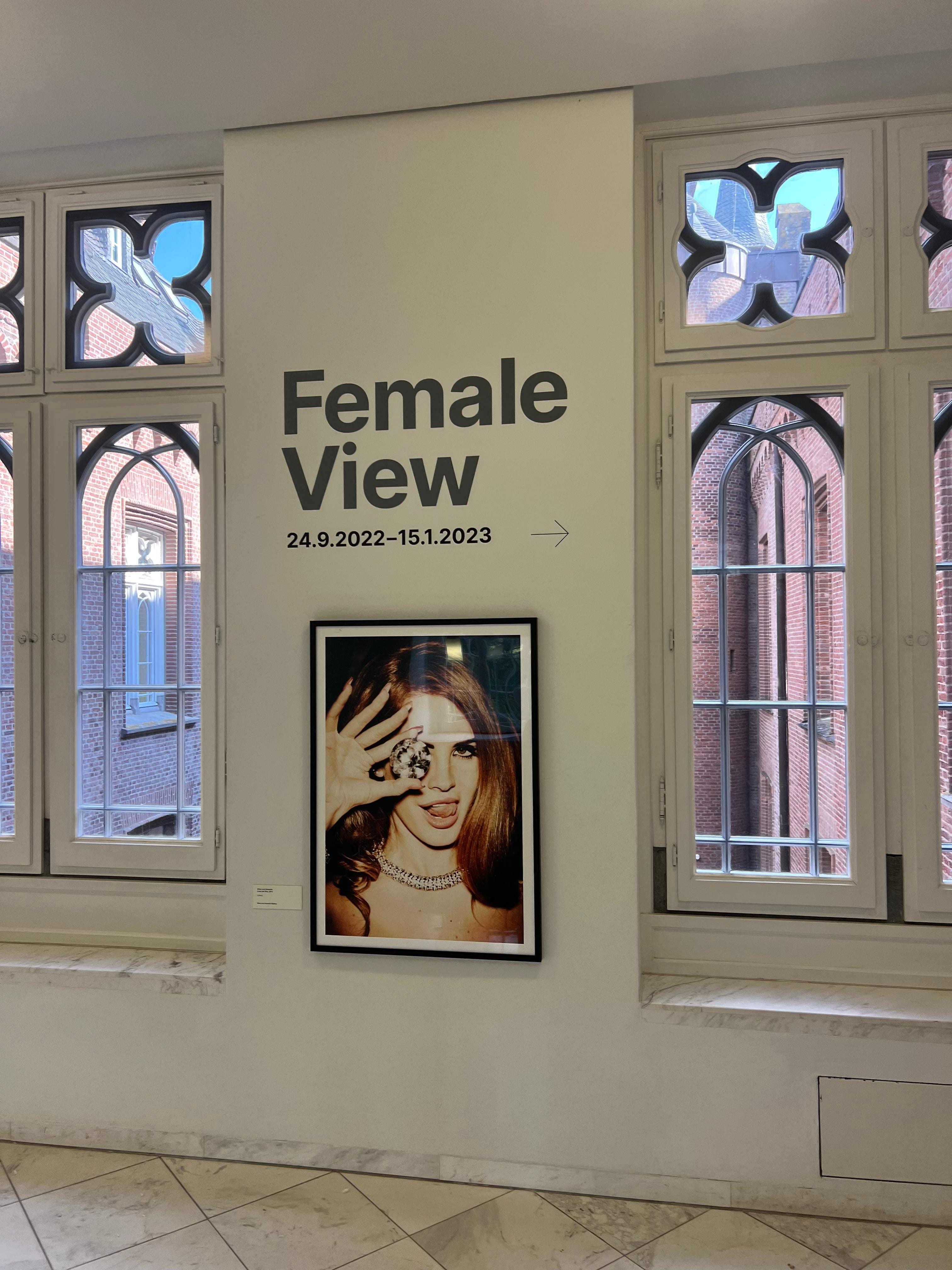
Ellen von Unwerth is today regarded as one of the most important fashion photographers of our time. She has portrayed the American singer Lana del Rey as a graceful beauty adorned with diamonds, and photographed the German actress Diane Kruger wearing Dior’s €750 “We Should All Be Feminists” T-shirt and white underwear.
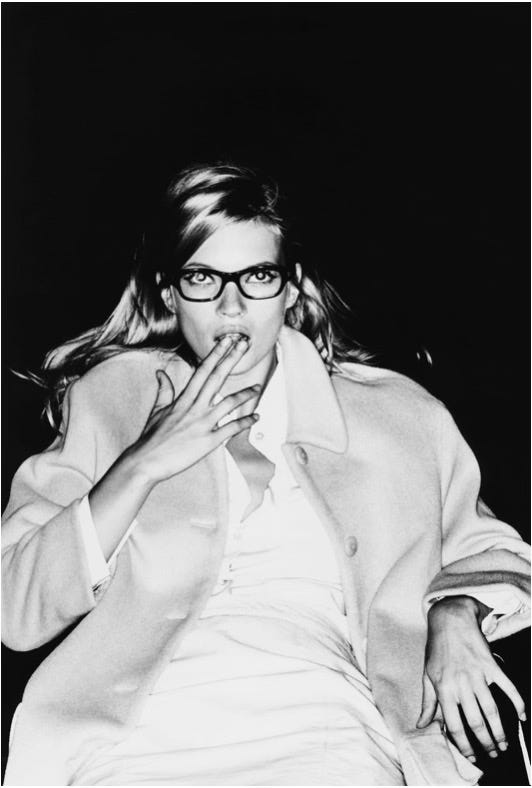
Top models such as Kate Moss and Naomi Campbell, as well as the Kardashians, regularly appear in front of her camera.
Born in 1954 in Frankfurt am Main, von Unwerth spent her childhood and adolescence in an orphanage. At the age of sixteen, she was discovered as a photographic model by Bravo. She moved to Paris and became a top model. Later—by chance and without any formal training—she began taking photographs herself. Today, she is celebrated worldwide as a photographer. She also made a cameo appearance in Emily in Paris.
We often know the images of fashion photographers such as Peter Lindbergh, Mario Testino, Helmut Newton, Irving Penn, or Steven Meisel—images that present women as beautiful and strong. Yet it was also women behind the camera who profoundly shaped fashion photography throughout the twentieth century. Their work appeared in leading fashion magazines such as Harper’s Bazaar and Vogue.
In 2022, the exhibition Female View at Schloss Moyland presented their photographs alongside works by other important female fashion photographers. Spanning the past one hundred years, the exhibition placed the female gaze at its very center.
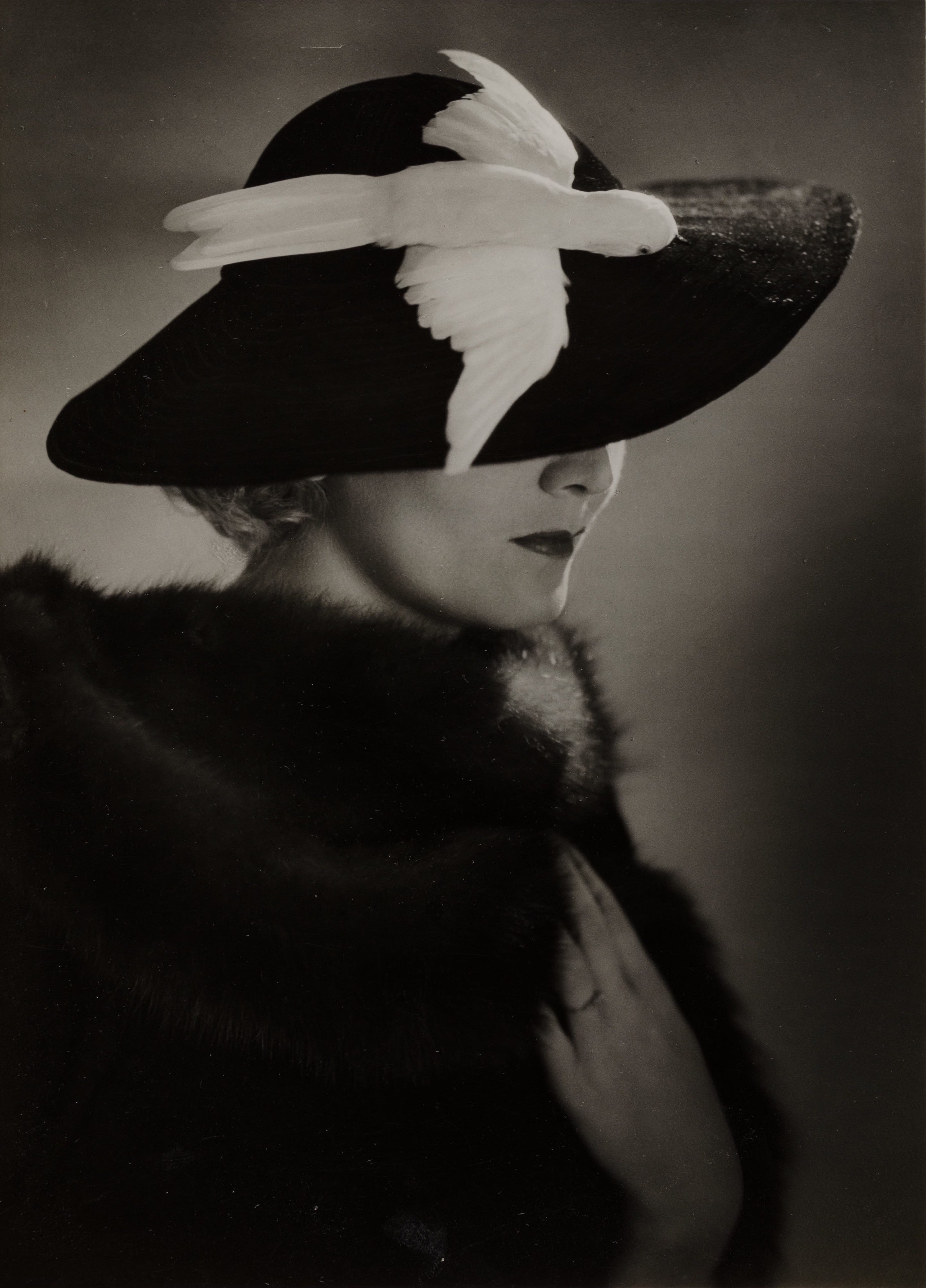
Among them was the photographer Yva, born in Berlin in 1900 under her civil name Else Ernestine Neuländer. Helmut Newton completed his training in her studio. Because of her Jewish identity, the Nazi regime imposed a professional ban on her from 1938 onward. In 1942, she was deported and is believed to have been murdered in the Sobibor extermination camp.
The devastating impact of political events in the twentieth century on everyday life was a central concern for many of these photographers. After all, it was the century in which the greatest crimes against humanity and the bloodiest conflicts took place. In their images, they documented violence, unfreedom, and inequality.
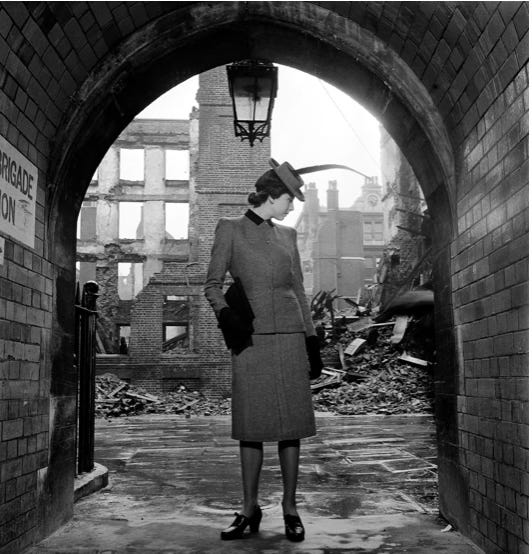
The American photographer Lee Miller documented the aftermath of the Second World War for the U.S. edition of Vogue, alongside her fashion photography. Even after the war and the division of Germany, photographers in East Germany continued to address everyday life in the German Democratic Republic.
Because of state restrictions and ideological constraints, their political messages and depictions of alternative ways of life were often concealed. Among the most well-known East German photographers are Ute Mahler and Sybille Bergemann. Bergemann, in particular, focused on the alternative fashion of the rebellious subculture within the GDR.
How deeply personal experiences of social and political inequality continue to shape photographic work today is evident in the oeuvre of Amber Pinkerton. The young photographer, who has Jamaican roots, began engaging with questions of race, skin color, and class in her work at the age of nineteen, after moving to London to study photography.
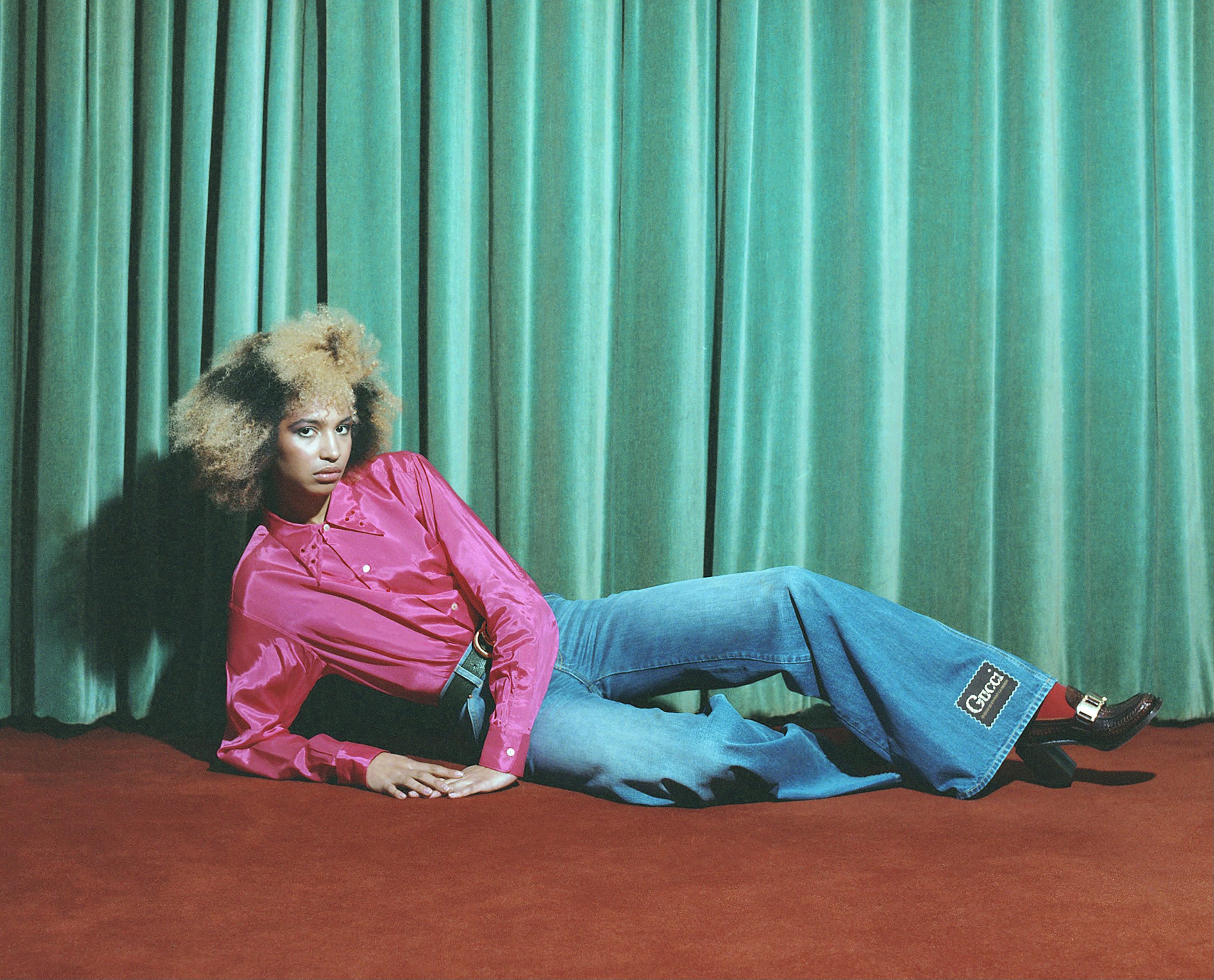
Growing up in an artist family in Jamaica—in privileged circumstances, as she herself has said—she only became fully aware in London of how Black women, and thus she herself, are perceived and treated in England. In response, she began to portray Black women in her photographs far removed from visual stereotypes.
The female perspective on social inequality and political injustice is just as striking as her gaze upon the female body and its visual staging. Fashion photography, in particular, may be consumed largely by women, yet it is the so-called male gaze that remains omnipresent—not only in film and literature, but in photography as well.
The male gaze is a concept from film theory, coined by the British film critic Laura Mulvey, who famously criticized the objectification of women as sexual beings in cinema. The male gaze operates on three levels: the camera directed at the female protagonists, the looks of male characters toward female characters, and the gaze of the male spectator. The man functions as the narrator; the woman occupies a passive role. She is reduced to a sexual object whose purpose is to fulfill male desire. The man does not merely depict the woman—he interprets her. He is the storyteller; she is only the object of his story. But what happens when women look at women?
“A kaleidoscope can serve as a metaphor for the female view. There is no single, unified image in the female gaze, but rather a multiplicity of perspectives in constant and dynamic motion,” says Antje-Britt Mählmann, curator of the exhibition. The gaze through the camera, she notes, is often shaped by the relationship between model and photographer. “And here, the way female photographers look at other women can at times be more attentive—marked by an inner understanding of what it means to be a woman.”
The female gaze, says Amber Pinkerton, is far more intuitive. The Jamaican-born photographer—named by Forbes and New York Times Magazine as one of the most promising young photographers of our time—works for renowned magazines such as Dazed, The Cut, and i-D, as well as brands like Gucci, Miu Miu, and Nike.
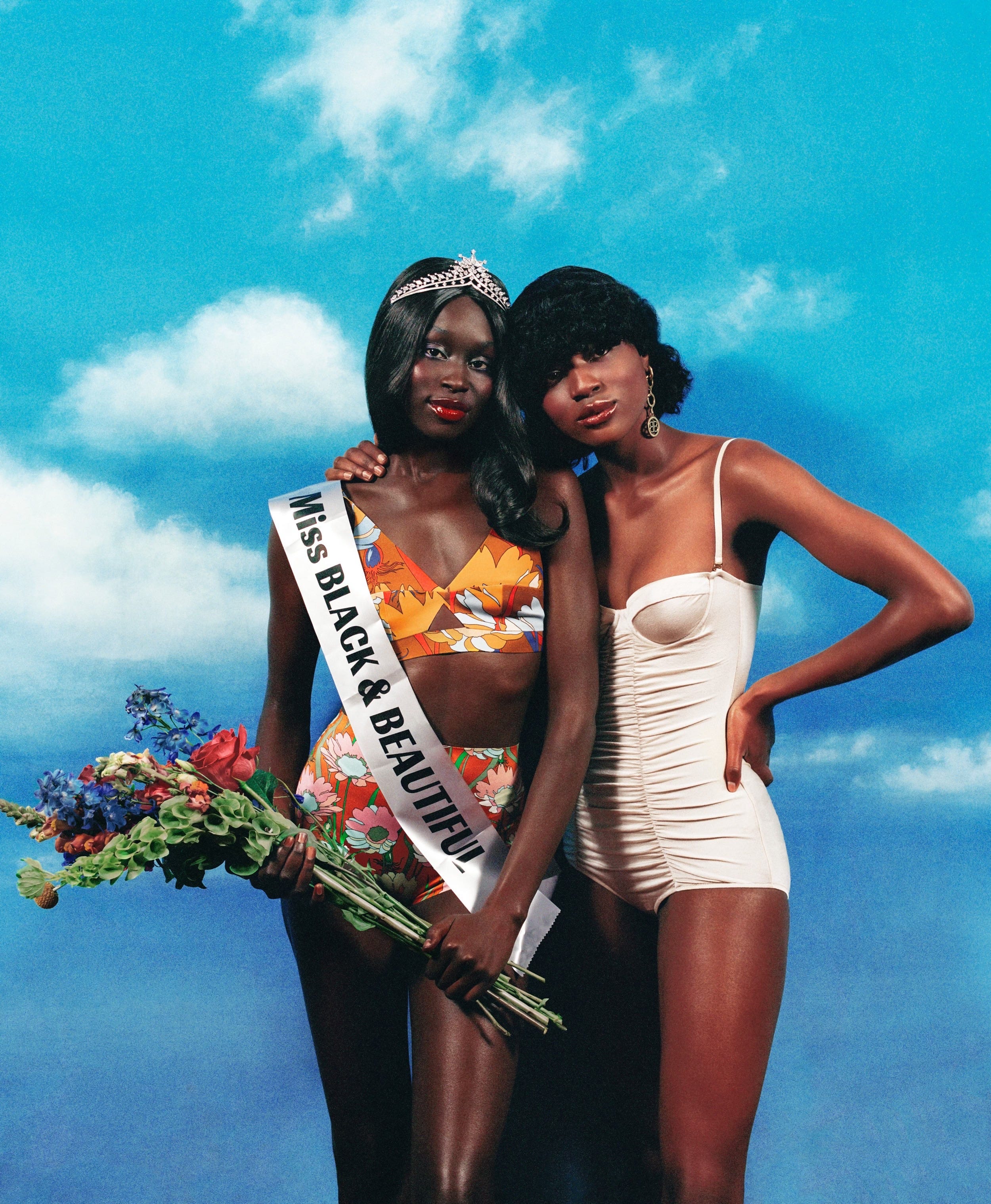
“Even the way we portray female sexiness is rooted in elegance, dignity, and regality,” she says. The female gaze, then, is eclectic, dynamic, and multifaceted—not monothematic.
The photographs of Ellen von Unwerth and the German photographer Gabo emphasize female sexuality while not shying away from nudity. It is as true that both photographers—who themselves were once photographed by men as models—have internalized the male gaze and now capitalize on it in their work, as it is that they deliberately play with the boundaries and contradictions of female sexuality and beauty.
It is true that Gabo and Ellen von Unwerth engage quite consciously—and provocatively—with the male gaze. Yet because both have personal experience in front of the camera, this playful handling of provocation can indeed have an emancipatory and even cathartic effect. For sexuality and the play with desire are very much facets of female power and self-determination.
“It is important to show how female photographers working within a male-dominated industry are able to return the male gaze back to the viewer—for instance, in the cowboys featured in von Unwerth’s early photographs of Claudia Schiffer from 1989,” says Antje-Britt Mählmann. It is therefore not femininity or female sexuality that the female gaze seeks to withhold from the audience.
The female gaze, too, depicts femininity and female sexuality—but it shows more than that. It reveals that interpretation does not belong to the man; that the body, identity, and beauty of a woman belong to one person only: the woman herself. She is not an object but a self-determined subject—one who presents herself rather than being presented, who is not interpreted but expresses herself, who is not a character in someone else’s story but tells her own.
Participation in the trip was supported by Schloss Moyland.
The article was published on Die WELT in 01.02.2022.
Photos:
Ellen von Unwerth
Claudia Schiffer for Guess, Nashville, 1989
Archival pigment print
© Ellen von Unwerth
Ellen von Unwerth
Lana del Rey, 2012
C-print
© Ellen von Unwerth
© Yva (ca. 1935)
Lee Miller
Model (Elizabeth Cowell) wearing Digby Morton Suit, 1941
© Lee Miller Archives
Amber Pinkerton
Nadia, Girls Next Door, 2020
Digital C-Type
© The Artist, Courtesy Alice Black Gallery, London